Español
 Italiano
 Polski


Windows 7/8.1 in 2026 – Does It Make Sense and How to Minimize Risk?
- 19 Apr, 2026
- Home
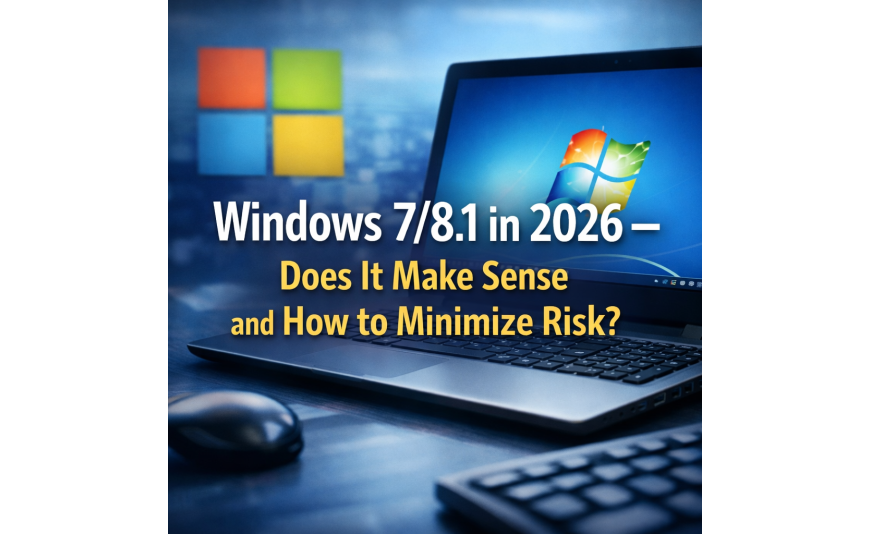
Windows 7/8.1 in 2026 – Does It Make Sense and How to Minimize Risk?
In the rapidly changing landscape of technology, the longevity of software is often debated. Windows 7 and 8.1, both beloved for their unique features and stability, continue to hold a special place in the hearts of many users, even as newer versions like Windows 10 and 11 gain prominence. The question that arises is whether using these older systems in 2026 is still a viable option or whether it's time to upgrade. With the extensive support lifecycle offered by Microsoft, many find comfort in sticking with what they know, avoiding the learning curve and potential compatibility issues that come with newer versions.
For individuals and businesses alike, the decision to hold onto older operating systems often boils down to cost and functionality. It's not just about being comfortable with the user interface; it's also a matter of budgets and resource allocation. Upgrading entire systems can be a hefty financial burden, especially for small business owners or individuals who use their PCs for basic tasks. Thus, the prospect of using Windows 7 or 8.1, which they already own and understand, might seem more appealing when considering overall value and utility.
However, clinging to these older versions isn't without its challenges. As software ages, it becomes more vulnerable to security threats, and finding solutions or workarounds can be increasingly difficult. This is where the balance between maintaining comfort and ensuring security comes into sharp focus. Users must weigh the potential risks against their needs to decide if holding onto Windows 7 or 8.1 is worth it, or if they should consider other options that might offer better security and support in the long run. This ongoing dilemma is a reflection of how technology continues to evolve, urging users to adapt while considering the implications of each choice.
The Appeal of Familiarity: Why Some Stick with Windows 7/8.1
For many, the decision to continue using Windows 7 or 8.1 is driven by a strong sense of familiarity. These operating systems offer a level of comfort and ease that newer versions might lack, especially for those who have been using them for years. There is a satisfaction in knowing exactly where every setting is located, and how each feature works without the need for extensive re-learning. This sense of ease often translates into greater productivity, as users can focus on their tasks without being interrupted by a need to understand new interfaces or functions.
Yet, sticking with the familiar isn't just about personal comfort. For businesses, especially those operating on tight budgets, the financial implications of upgrading can be significant. Investing in new hardware to support the latest operating systems or retraining employees can be costly and time-consuming. Thus, the allure of continuing with a known and trusted system, where the costs are already sunk and predictable, is a compelling reason to stick with it. But as support phases out, the question of where to buy necessary updates or how to ensure security becomes a pressing concern for these systems.
Security Concerns: The Risks of Staying with Older Systems
One of the primary risks of using Windows 7 or 8.1 in 2026 is the potential for increased vulnerability to cyber threats. As these operating systems age, Microsoft and other software developers gradually withdraw support, meaning fewer updates and patches to address security issues. This creates a tempting target for hackers who are well aware of the weaknesses in older systems. For users who rely on these systems, the stakes are high, particularly if sensitive data is involved. Ensuring robust security measures, such as firewalls and antivirus software, becomes crucial.
Beyond the immediate security risks, there is also the challenge of software compatibility. As newer applications are developed with the latest operating systems in mind, older systems may struggle to run them efficiently or at all. This can lead to a decrease in productivity and increased frustration for users who find their favorite applications are no longer supported. In such cases, the cost of upgrading – both financial and time-related – must be weighed against the potential losses incurred by sticking with outdated technology. The decision ultimately hinges on one's ability to implement effective safeguards ✔️ while maintaining operational efficiency.
Cost vs. Benefit: Evaluating Financial Impact
When considering whether to stick with Windows 7 or 8.1, the financial aspect cannot be overlooked. For many, the prospect of upgrading to a new operating system involves not just the purchase of new software, but potentially new hardware as well. The cost can be prohibitive, especially for small businesses that operate on thin margins. The decision often boils down to a basic cost-benefit analysis: will the benefits of upgrading, such as enhanced security and improved features, outweigh the upfront costs? For some, the answer is clear, while for others, it remains a complex calculation.
However, those who choose to stick with Windows 7 or 8.1 do have options to mitigate costs. Searching for low-cost upgrades or second-hand systems that run newer versions affordably can be a solution. Additionally, implementing stringent security measures can prolong the life of an older system without compromising safety. Understanding where to buy upgrades or how to find reliable sources for systems at a niska cena (low cost) can be crucial for those trying to stretch their IT budgets. In essence, while the financial aspect is a significant consideration, there are strategies to manage it effectively.
Strategizing Upgrades: When and How to Transition
While some users may choose to hold onto Windows 7 or 8.1 for as long as possible, others may decide it's time to make the leap to a newer system. Strategizing the transition is essential to minimize disruptions and ensure a smooth upgrade path. One approach is to phase in new systems gradually, allowing users to become accustomed to changes over time. This can reduce the shock that often accompanies significant shifts in technology. Additionally, providing adequate training and support can help ease the transition, ensuring that staff are comfortable and productive with the new systems.
For individuals, planning the transition might involve evaluating the requirements and benefits of newer operating systems, identifying where to buy them at a reasonable price, and timing the upgrade to coincide with natural hardware refresh cycles. By taking a strategic approach, the transition can be managed effectively, avoiding unnecessary stress and expense. As 2026 approaches, the question of when and how to upgrade from Windows 7 or 8.1 becomes increasingly pertinent, with careful planning being the key to a successful transition ✔️.
Understanding Legacy Systems: Why They Persist
Legacy systems, like Windows 7 and 8.1, continue to thrive in many environments due to their reliable performance and well-established functionality. These systems are often deeply integrated into the workflows of businesses, providing a stable platform for operations. Users appreciate the consistency and predictability that these older systems offer, which can be a stark contrast to the frequent updates and changes seen in newer operating systems. This reliability means that businesses can avoid the potential downtime associated with learning and adapting to new software. For many, the question isn't just about when to upgrade, but whether an upgrade is truly necessary from a practical standpoint.
Despite their advantages, legacy systems are not without their critics. Common objections to sticking with older systems include concerns about compatibility and security. Over time, as software developers focus on newer products, older systems can become increasingly isolated from updates and support. However, these challenges can be managed with a well-thought-out strategy. Organizations need to weigh the benefits of maintaining a known system against the risks of lagging in technological advancement. The key is to implement a robust IT strategy that includes regular assessments, security audits, and an understanding of how to maximize the existing infrastructure while planning for future growth.
Adapting to Change: The Role of Continuous Learning
As technology evolves, so too must the users who rely on it. Continuous learning becomes an integral part of staying relevant in a rapidly changing tech landscape. For those considering a transition from Windows 7 or 8.1 to newer operating systems, understanding the pitfalls and benefits of such a change is crucial. Continuous learning programs can help ease this transition by providing users with the skills and knowledge needed to operate efficiently within a new system. Whether it's through formal training sessions or self-directed learning, keeping up with technological trends ensures that users can continue to work effectively, regardless of the system they are using.
Resistance to learning new systems is a common hurdle, often stemming from a fear of the unknown or the perceived complexity of new technology. However, this resistance can be overcome by emphasizing the benefits of adaptation. Highlighting how newer systems can enhance productivity, improve security, and offer new features can motivate users to embrace change. Encouraging a culture of learning and curiosity within organizations can mitigate apprehensions, providing a supportive environment where users feel empowered to explore and adapt. This proactive approach not only facilitates smoother transitions but also fosters a resilient, adaptable workforce ready to tackle technological challenges.
The Economics of Software: Making Informed Decisions
Economic factors play a pivotal role in the decision-making process regarding software upgrades. For many businesses, the cost of transitioning to a new operating system is a major consideration. It's not only about purchasing new software but also about the potential need for new hardware and training. Calculating the return on investment for such an upgrade involves examining both direct and indirect costs, such as potential disruptions to operations and training expenditures. Businesses must conduct thorough cost-benefit analyses to determine whether the advantages of upgrading outweigh the financial implications, ensuring that any decision made aligns with their long-term strategic goals.
Understanding the financial landscape of software upgrades involves more than just assessing costs. Users must also consider the potential savings and efficiencies gained from adopting newer systems. Enhanced security features, improved functionalities, and increased support can all contribute to a more streamlined operation, potentially resulting in reduced downtime and increased productivity. For individuals and organizations alike, the opportunity to buy into systems at a competitive price can make the transition more palatable. By focusing on both the short and long-term benefits, users can make informed decisions that balance current budgetary constraints with future growth and efficiency opportunities ✔️.
Windows 11 Pro vs Enterprise/Education – A Comparison for Businesses and Schools
In today's fast-paced digital world, choosing the right operating system is crucial for both businesses and educational institutions. As technology continues to evolve, organizations are faced with the challenge of selecting software that not only meets their current needs but also positions them for future growth. Windows 11, with its modern interface and enhanced features, presents itself as a compelling option. However, the choice between Windows 11 Pro, Enterprise, and Education versions can be daunting. Each version offers distinct advantages and is tailored to different types of users and environments.
For many businesses, the decision to upgrade or switch to a new operating system is driven by a need for increased security, better productivity tools, and improved collaboration capabilities. Schools, on the other hand, may prioritize features that enhance learning experiences and offer robust management solutions for educators and IT administrators. Understanding the key differences between Windows 11 Pro and Enterprise/Education can help organizations make informed decisions that align with their specific needs and goals.
Imagine a mid-sized company looking to enhance its cybersecurity posture while maintaining ease of access for remote employees. They might lean towards Windows 11 Enterprise due to its advanced security features, such as Windows Information Protection and BitLocker encryption. Conversely, a university aiming to provide students and faculty with flexible, intuitive tools might find Windows 11 Education more aligned with its priorities. These scenarios highlight the importance of evaluating each version's unique attributes to determine the best fit for your organization.
Windows 11 Pro: Balancing Cost and Features
Windows 11 Pro is designed for small to medium-sized businesses that require a balance of functionality and affordability. With features like Group Policy, Assigned Access, and Microsoft Remote Desktop, it provides the essential tools needed to manage business operations efficiently. One of the significant advantages of Windows 11 Pro is its relatively low cost, making it an attractive option for organizations looking to maximize their IT budget. For those wondering where to buy, a niska cena can often be found through authorized resellers or online platforms, ensuring a cost-effective solution for your business needs.
Additionally, Windows 11 Pro offers strong security measures suitable for businesses that handle sensitive data. While it may not have all the advanced features of the Enterprise edition, it includes essentials such as BitLocker device encryption and Windows Defender Antivirus, offering a solid level of protection. For companies seeking an operating system that provides both value and functionality, Windows 11 Pro is a compelling choice. This version supports a seamless transition to the new OS, with straightforward aktywacja processes and support for legacy applications.
Windows 11 Enterprise: Advanced Security and Management
For larger organizations with complex IT infrastructures, Windows 11 Enterprise delivers advanced security features and management tools. This version is ideal for businesses that prioritize data protection and need to comply with strict regulatory standards. With features such as Advanced Threat Protection and AppLocker, Windows 11 Enterprise provides a robust defense against modern cyber threats. These enhancements are crucial for enterprises that wish to safeguard their networks and sensitive information.
Moreover, Windows 11 Enterprise offers comprehensive device management capabilities, allowing IT administrators to efficiently oversee system updates and configurations. The Enterprise edition supports various deployment models, including cloud and hybrid environments, making it a versatile choice for businesses with diverse needs. For those deciding where to purchase, finding a trusted vendor is key, as they can provide the necessary klucz or account setup assistance, ensuring a smooth implementation process.
Windows 11 Education: Enhancing Learning Experiences
Educational institutions looking to foster a dynamic learning environment may find Windows 11 Education to be the perfect fit. This version offers tailored features that enhance classroom experiences and streamline administrative tasks. Tools like Microsoft Teams integration and digital whiteboards enable collaboration and creativity, transforming the way students and educators interact. For schools aiming to provide state-of-the-art learning tools without breaking the bank, Windows 11 Education is available at a competitive price point.
Windows 11 Education also includes security features that protect students' data and maintain the integrity of educational resources. IT administrators benefit from simplified device management and deployment, ensuring that technology in the classroom runs smoothly and efficiently. The ability to customize settings and access controls makes it a versatile choice for institutions of all sizes. Finding where to buy can be straightforward, with educational discounts often available through authorized channels.
Deployment and Support: Ensuring Successful Implementation
Regardless of the version chosen, successful deployment of Windows 11 requires careful planning and execution. Organizations must assess their current hardware and software infrastructure to ensure compatibility with the new operating system. Engaging with experienced IT professionals can facilitate a smooth transition, minimizing disruptions to business or educational activities. Additionally, Microsoft provides comprehensive support and resources to assist during the upgrade process.
It's essential to consider the long-term benefits of upgrading to Windows 11, including improved performance, security enhancements, and future-ready capabilities. With proper aktywacja and configuration, businesses and schools can leverage the full potential of Windows 11, creating a more secure and productive environment. Whether opting for Pro, Enterprise, or Education, each version offers unique advantages that cater to specific organizational requirements.
Conclusion: Making the Right Choice
Choosing between Windows 11 Pro, Enterprise, and Education ultimately depends on the specific needs and goals of your organization. Businesses seeking a cost-effective solution with essential features may gravitate towards Windows 11 Pro, while those requiring advanced security measures and management tools might find Enterprise to be more suitable. Educational institutions focused on enhancing learning experiences will appreciate the tailored features of Windows 11 Education.
Ultimately, the decision involves evaluating the unique attributes and benefits of each version. By understanding these differences and considering factors such as budget, security needs, and deployment capabilities, organizations can make informed decisions that align with their strategic objectives. Whether you buy online or through a trusted vendor, Windows 11 offers a transformative experience that can drive productivity and innovation in both business and educational settings. ✔️
Understanding the Integration Capabilities of Windows 11
One of the appealing aspects of Windows 11, regardless of the version, is its seamless integration with Microsoft's ecosystem. This feature is particularly beneficial for organizations already using Microsoft 365 or Azure services. The ability to synchronize and manage data across platforms ensures that businesses can maintain continuity in their operations without the hassle of migrating to entirely new systems. This integrated approach enhances workflow efficiency, allowing users to switch between applications like Microsoft Teams, OneDrive, and Outlook with ease.
In scenarios where real-time collaboration and data sharing are crucial, such as in remote work environments or distributed educational settings, Windows 11's integration capabilities shine. For instance, teachers can easily share resources and assignments with students using OneDrive, while businesses can streamline meetings and communication through Microsoft Teams. This cross-platform compatibility not only boosts productivity but also reduces the learning curve associated with adopting new technology. By leveraging these capabilities, organizations can ensure a smooth and efficient operational flow.
Installation and Activation Process
The installation process for Windows 11 Pro, Enterprise, and Education versions is designed to be user-friendly, yet it requires careful attention to detail. Before you start, make sure your hardware meets the minimum system requirements for Windows 11. If you're upgrading from a previous version, it's crucial to back up your data.
To start the installation, you need to download the installation file from the official Microsoft website. Ensure you have a stable internet connection to avoid interruptions during the download process. Once downloaded, run the installer and follow the on-screen instructions. ✔️
During installation, you will be prompted to enter your product key. This step is crucial for the activation of Windows 11. If you purchased the product online, you should have received the key via email. Enter the key when prompted to activate your version of Windows. If successful, a confirmation message will appear.
Common Issues and Solutions
Users often encounter issues related to compatibility, especially when upgrading from older systems. If you face compatibility warnings, double-check your system specifications and make sure all drivers are up-to-date.
Another frequent problem involves activation errors. If your product key doesn't work, verify that it was entered correctly and corresponds to the version you are installing. If the issue persists, contact Microsoft support for assistance.
Network-related issues can also arise during installation. Check your internet connection and ensure your firewall settings are not blocking the installation process.
Key Changes Compared to Other Versions
Windows 11 Pro offers enhanced security features compared to the Home version, including BitLocker encryption and Windows Information Protection. These additions make it suitable for business environments where data security is a priority.
The Enterprise edition includes all features of the Pro version but adds advanced capabilities for IT management and deployment. For example, it provides tools for virtual desktop management and advanced analytics. It's ideal for larger organizations needing robust controls.
The Education version is tailored for schools and educational institutions with features that facilitate learning and classroom management. It includes tools like Microsoft Teams for Education and simplified device management.
Checklist for Choosing the Right Version
- Assess your budget — find out where to buy Windows 11 at a low price.
- Identify the primary use of the system — business, education, or personal use.
- Consider the number of devices you need to upgrade.
- Evaluate the security features required for your environment.
- Review the management and deployment capabilities you need.
- Check compatibility with existing hardware and software.
- Ensure you have a reliable source to buy the software legally.
- Understand the support and maintenance options available.
- Compare the total cost of ownership — not just the purchase price.
- Look into the ease of integration with current systems.
- Investigate user feedback and experiences with each version.
- Verify the system requirements before purchase.
- Consider future scalability and potential upgrades.
- Ensure you have a valid product key or account for activation.
Installation and Activation in 2026: Challenges and Solutions
As technology advances, using Windows 7 or 8.1 in 2026 can present some unique challenges, especially during installation and activation. The first step is to ensure your hardware supports these older systems, as newer components may lack compatible drivers.
To install Windows 7 or 8.1, you'll need an official installation media. This can be a USB drive or a DVD, depending on your preference. Before proceeding, check that your BIOS or UEFI settings allow booting from external media.
Once installed, activating these versions might be tricky since Microsoft has officially ended support. You may need a valid activation key that hasn't been used before. Online forums and communities can be valuable resources for finding solutions.
It's worth noting that security is a significant concern. Without regular updates, you'll need to be proactive in protecting your system. Using third-party antivirus solutions and keeping your firewall active is crucial for maintaining security.
Common Problems with Windows 7/8.1 in 2026
Running outdated operating systems like Windows 7 or 8.1 can lead to frequent issues. A common problem is software compatibility. Many modern applications might not run efficiently or at all on these older systems.
Another frequent issue is hardware compatibility. As technology evolves, new hardware may not have drivers available for older systems, which can lead to reduced functionality or system instability.
Security risks are also prevalent when using unsupported operating systems. Without regular updates, these systems are vulnerable to new threats. Users must rely on third-party tools to fill the security gap.
Key Differences from Newer Versions
When comparing Windows 7 or 8.1 to more recent versions like Windows 10 or 11, several differences stand out. Firstly, the user interface of newer versions is more modern and intuitive, offering features like virtual desktops and improved search functionality.
Security enhancements in Windows 10 and 11 are significant. Features such as Windows Hello, device encryption, and advanced threat protection provide layers of security that older versions lack.
Performance improvements are another factor. Newer operating systems are optimized to work efficiently with the latest hardware, providing faster boot times and improved multitasking capabilities.
Checklist: Staying Safe and Functional with Windows 7/8.1
- Ensure your hardware is compatible with Windows 7/8.1.
- Use official installation media for setup.
- Acquire a valid activation key to avoid interruptions.
- Install all available updates immediately after installation.
- Regularly back up important files to an external drive or cloud service.
- Employ robust third-party antivirus and anti-malware solutions.
- Enable your firewall for added protection.
- Limit internet usage on these systems to reduce exposure to threats.
- Consider using a virtual machine for enhanced security.
- Regularly check for updates from software vendors.
- Use alternative browsers that still support these systems.
- Join forums or communities for support and tips.
Using Windows 7 or 8.1 in 2026 may not be the most conventional choice, but for some, it might still be a viable option. By following best practices and remaining vigilant, users can mitigate many risks associated with these older operating systems, all while benefiting from the familiarity and features they offer. If you're considering sticking with these systems, make sure to evaluate whether it's worth the trade-off compared to upgrading to a more recent version.