Español
 Italiano
 Polski


How to create a USB flash drive with Windows?
- 28 Apr, 2026
- Home
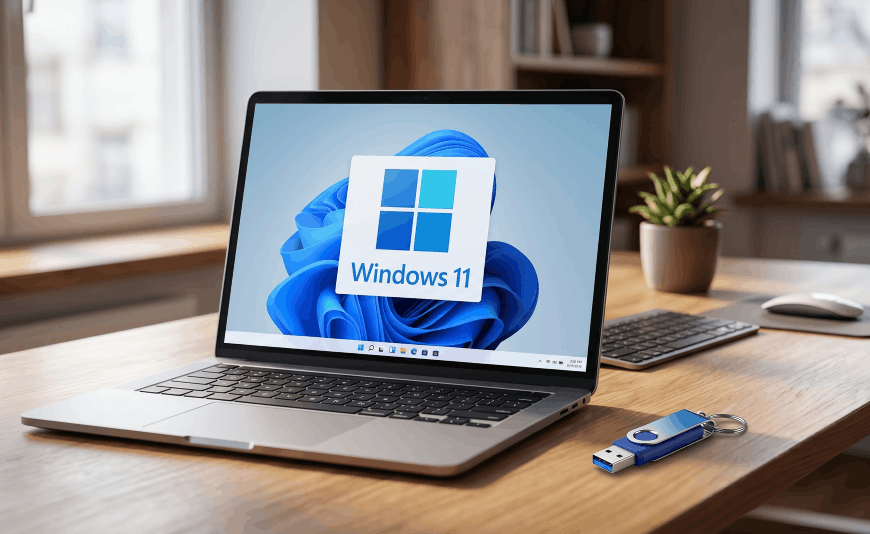
Installing an operating system from a USB drive has become the standard today. This method is convenient, fast, and reliable, especially when a computer does not have a DVD drive. A USB stick with Windows allows you to install the system on almost any device - from laptops to desktop computers.
What do you need to prepare a USB stick with Windows?
Before you begin, make sure you have the essential components ready. Without them, creating installation media will not be possible.
- A USB stick with at least 8 GB of storage
- A stable internet connection
- A computer running Windows
- Official Microsoft tool - Media Creation Tool
It is important to ensure that the USB drive is empty. The process of creating installation media usually deletes all existing data on the device.
How to create USB stick with Windows step by step
The simplest and safest method is to use the official tool provided by Microsoft. This guarantees that system files are up to date and free from errors. Start by downloading the Media Creation Tool from the official Microsoft website. After launching the program, accept the license terms and choose the option “Create installation media for another PC”.
Next steps:
- Select the system language
- Choose the Windows edition
- Set the architecture (most commonly 64-bit)
Then select the “USB flash drive” option. The program will automatically detect the connected USB device and begin downloading system files. The process may take several dozen minutes, depending on your internet speed.
Once completed, your USB stick with Windows is ready to use.
Installing Windows from a USB drive - how to start the installer?
Preparing the USB stick is only the first step. To begin installing Windows from a USB drive, you need to properly configure the computer startup.
After connecting the USB stick:
- Restart the computer
- Enter BIOS or UEFI (usually by pressing F2, DEL, or ESC)
- Set USB as the first boot device
After saving the changes, the computer will restart and automatically launch the Windows installer from the USB drive.
Common issues when creating a USB stick with Windows
Despite the simplicity of the process, some problems may occur. Knowing the most common ones can help avoid frustration.
A frequent issue involves using a low-quality or slow USB drive. Choosing a USB 3.0 device significantly improves speed and reliability.
Sometimes the computer does not detect the USB stick during startup. In this case, it is worth checking BIOS/UEFI settings or using the boot menu.
Errors may also appear during file download. Restarting the tool and ensuring a stable internet connection usually resolves the issue.
Why is it worth having a USB stick with Windows?
Having your own installation media gives you independence and flexibility. In case of system failure, you can quickly restore your computer without visiting a service center.
A USB stick with Windows is also useful when replacing a hard drive or upgrading your computer.
This practical solution saves time and ensures continuity of work. Once you know how to create USB stick with Windows, you can handle system installation on your own and avoid unnecessary complications.